
Silent Movie Review: “The Lodger: A Story of the London Fog” (Alfred Hitchcock, Monochrome May Special)
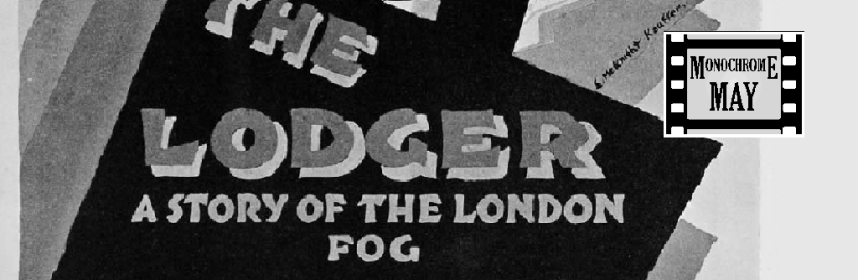
Welcome back to Monochrome May, The Splintering’s month-long celebration of everything blanc and noir… kind of.
While not his very first feature film, Alfred Hitchcock’s 1927 thriller The Lodger: A Story of the London Fog marks the renowned director’s first foray into suspense, and it also sets the scene for the themes and trademark visual flourishes that would become defining elements of his life’s work.
The story of The Lodger is adapted from Marie Belloc Lowndes’ novel of the same name, which was published in 1913 (though it started as a short story published in McClure’s Magazine in 1911). The Lodger takes inspiration from the Jack the Ripper murders from the 1880s, as the story tells the tale of a mysterious stranger renting a room amid a string of violent murders on the London streets.
Ivor Novello stars as Jonathan Drew, the enigmatic boarding house lodger, who has a charming yet creepy air about him from his first appearance on screen. He’s certainly not short of the cash necessary to keep his landlords off his back… for a while, at least. Despite Jonathan’s mysterious behavior and his comings and goings at odd times, he develops an attraction to the landlords’ flirtatious, blonde (of course) daughter, Daisy, played by June Tripp, adding an element of romance to the mystery.
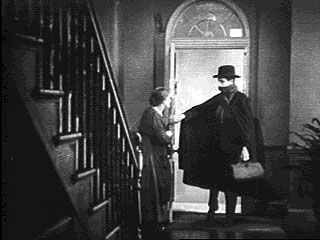
As the story of The Lodger unfolds, adherents to film auteur theory will undoubtedly start to draw thematic parallels to Hitchcock’s later films: wrongful accusation, voyeurism, moral ambiguity. All of these play subtly on the audience’s perception, keeping viewers in an uneasy but entranced state for much of the film. Is the killer right around the corner, or is he hiding in plain sight?
The themes are not the only things that are proto-Hitchcock. As a silent film, Hitchcock is limited to creating a world of suspense with only the visuals. The spinning camera in the opening murder scene pulls viewers straight into the dreadful scene. The shadows stretch and linger across the walls, and the lighting pops from harsh whites to murky blacks, creating a moody, noir-esque vibe before the term “film noir” was coined (in 1946! Captain Know-It-All strikes again!). And of course, there is ample use of the fog machine, making the London streets feel even more daunting and dangerous, and naturally making good on the subtitle of the film A Story of the London Fog.
Of course, The Lodger is not without flaws. Aside from the fact that modern audiences (ick) will probably shy away from silent movies as a whole, the pacing is kind of rough, even by the standards of the era. There is also a big mob chase scene near the end which is a bit too melodramatic and out of sync with the rest of the film’s tone.
As Hitchcock’s first stab at suspense, The Lodger is still a satisfying watch for suspense or silent film aficionados, as well as fans of the director. If you’re interested, you’re in luck! You can watch the YouTube upload below, or if you want to steer clear of anything Google-related (on account of all the evil), you can also watch it for free via the Internet Archive here.
Thanks for reading!
To check out more of The Splintering’s Monochrome May content, go here. Please consider following The Splintering on social media or bookmarking the site for more independent entertainment news, views, and commentary!
Like what you just read?
The Splintering is 100% ad-free: no banners, no pop-ups, no sponsored nonsense. The trade-off is we need you to come to us. Get new posts by email and never miss a campaign, interview, or unboxing.
No ads, no spam. Unsubscribe anytime.

The Splintering’s TeePublic store has items for all budgets, great and small! If you like what we do & want to help keep our site 100% free of paid ads, go here!

