
Top 10 Horror Pinball Machines of the Solid-State Era
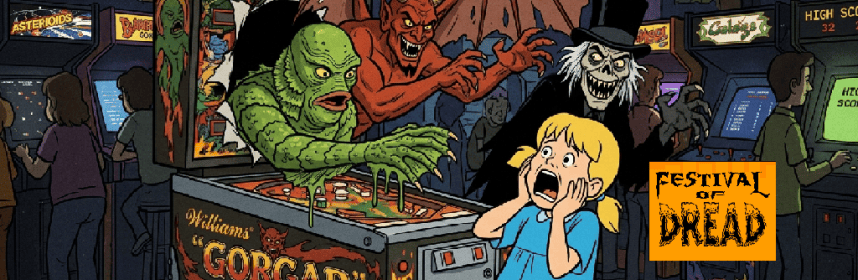
Pinball and horror have always gone together. Give a designer a dark theme and an open playfield and you get demons, vampires, haunted houses, and at least one mechanical hand with a mind of its own.
So, with the Halloween season (and our own Festival of Dread) in full swing, we are counting down the ten best horror machines of the classic solid-state era, from the first talking games of the late seventies through 1999, when Bally and Williams shut down pinball production and an era ended with them.
Dim the lights, drop in your quarters, and try not to drain.
10. Class of 1812 (Gottlieb, 1991)
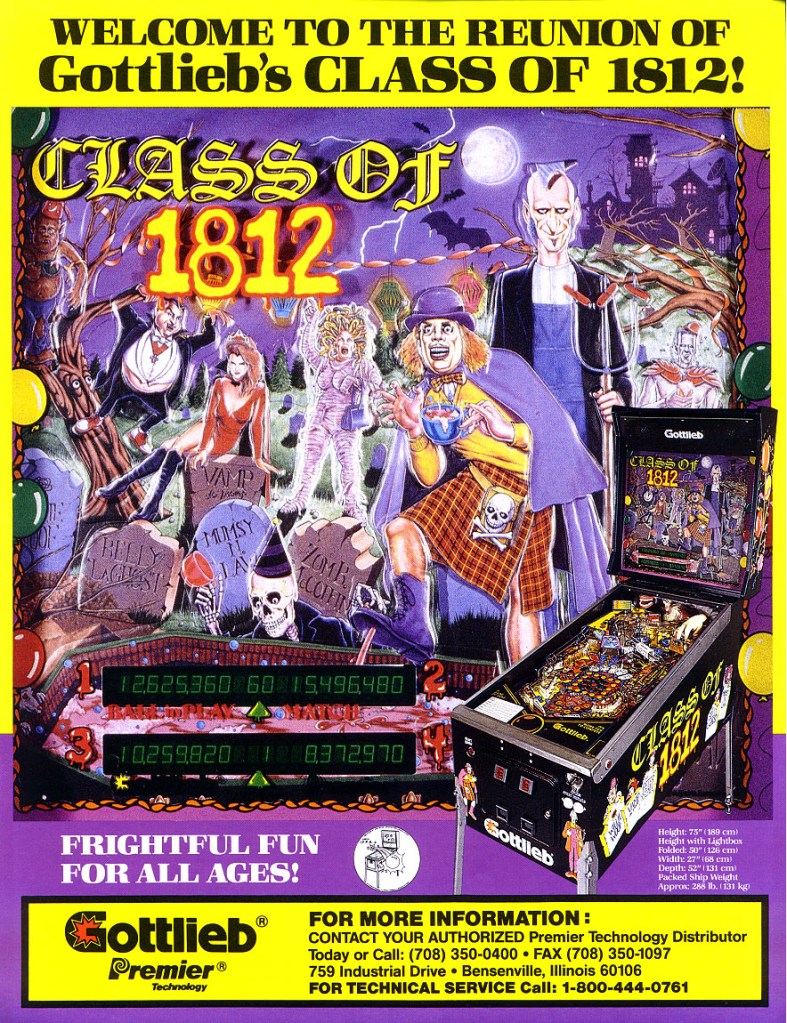
Ray Tanzer and Joe Kaminkow built a class reunion for long-dead monsters, under a vacuum-formed 3D backglass that includes Lon Chaney from the lost silent film London After Midnight. During “Multiball Madness,” a mechanical heart beats on the playfield and chattering teeth chatter along while chickens cluck The 1812 Overture. It is easily the weirdest game on this list, and the one most likely to be somebody’s personal favorite. Every countdown needs a cult pick, and this is ours.
9. Tales from the Crypt (Data East, 1993)
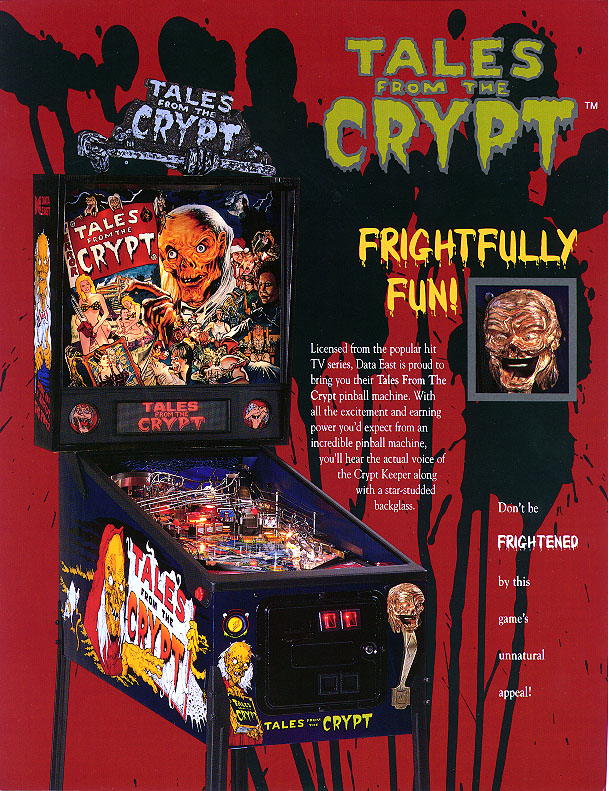
John Borg’s take on the HBO horror anthology show is hosted by the Crypt Keeper himself, cackling his way through modes drawn from episodes of the show. The plunger is a door handle topped with the Keeper’s head, a tombstone target drops into the playfield to open the Crypt for multiball, and an electric chair scoop waits in the corner. Gory, funny, and better than its reputation, Tales from the Crypt is the strongest horror game Data East ever made.
8. Gorgar (Williams, 1979)
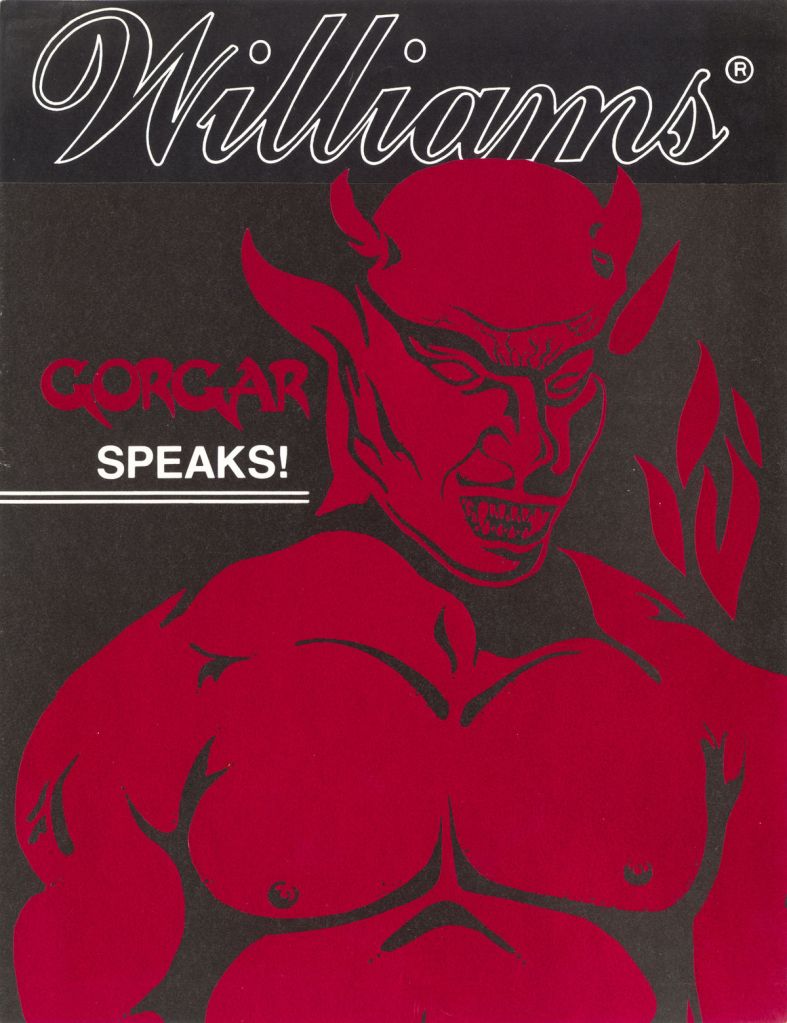
Barry Oursler’s horned demon Gorgar was the first talking pinball machine, featuring a growling titular villain with a seven-word vocabulary (“Gorgar speaks,” “Me got you”) while a heartbeat soundtrack beats faster and faster the longer you manage to survive. The backglass, a demon rising from a fire pit over a sacrificial altar, leaned straight into the era’s satanic panic. Simple as a player, untouchable as a piece of horror pinball history, and Williams shipped an impressive 14,000 of them. Pinball learned to talk, and the first thing it did was threaten you.
7. Haunted House (Gottlieb, 1982)
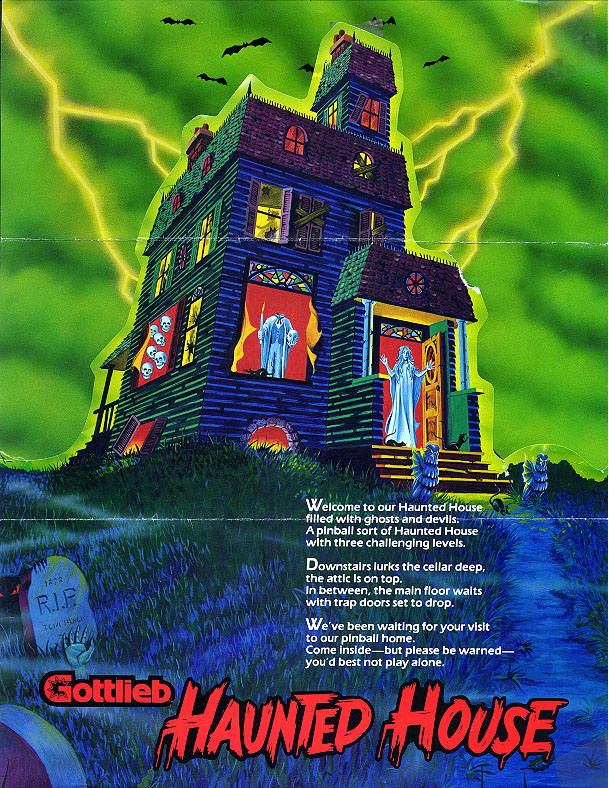
John Osborne’s widebody giant Haunted House was the first game with three full playfields that the ball travels between: a cellar below the main surface, the main floor, and an attic up top, worked by a record eight flippers. There is no multiball and no speech, just secret passages, trap doors, and Bach’s Toccata and Fugue playing to set the mood. As a pure haunted house theme executed at an impressively large scale, nothing else in the era touches it.
6. Creature from the Black Lagoon (Bally, 1992)
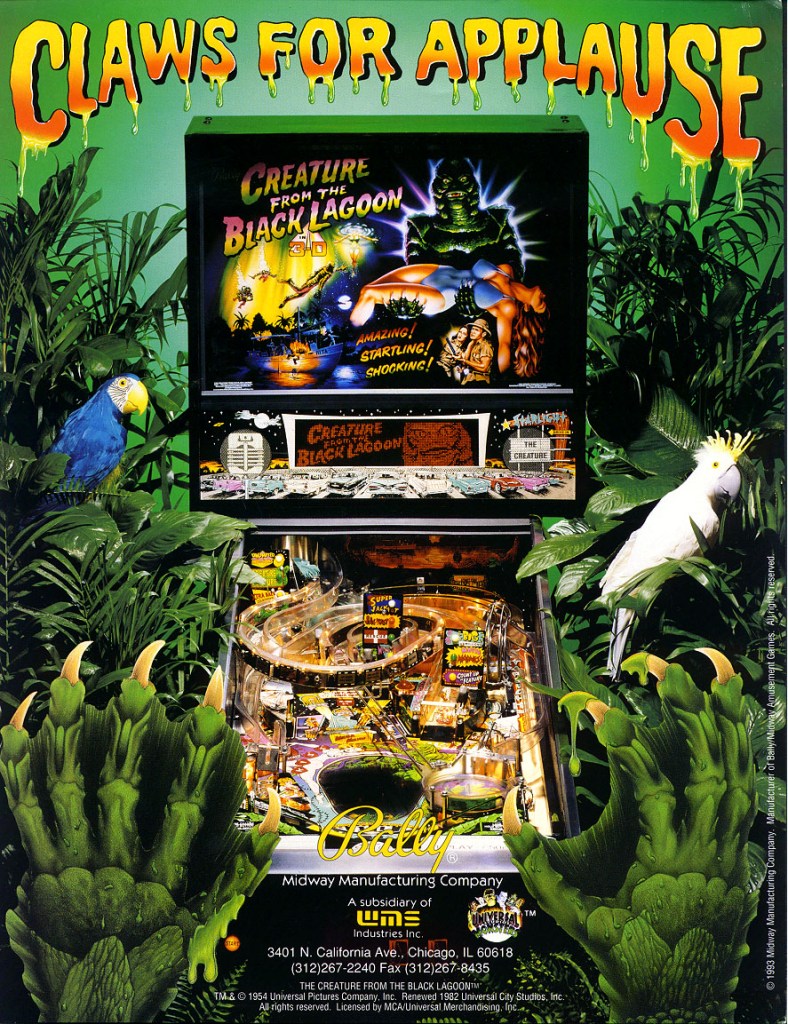
John Trudeau set the fish-man loose at a 1950s drive-in theater, complete with period rock and roll, a snack bar, and a date in the back seat. During multiball, a hologram of the Creature appears beneath the playfield and swipes at the ball, still one of the great visual tricks of the dot matrix era. It charms more than it scares, but the Creature himself remains an icon and the game around him is excellent.
5. Bram Stoker’s Dracula (Williams, 1993)
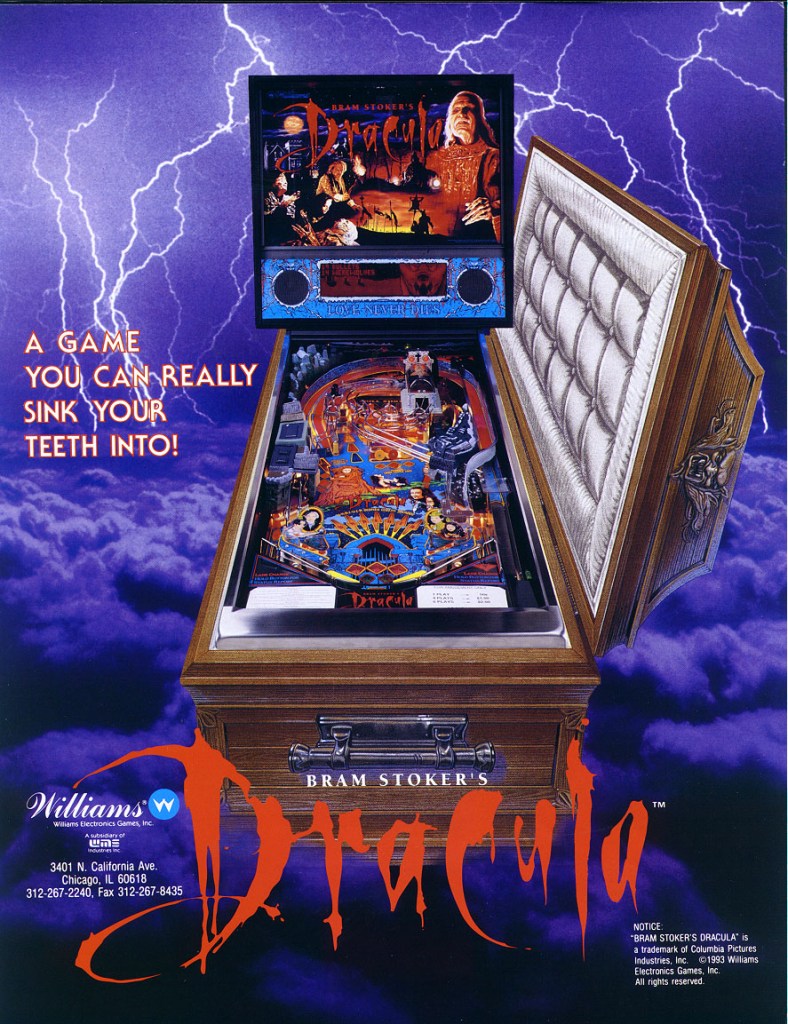
Barry Oursler’s gothic nightmare is famous for its “Mist Multiball” mode, where a magnet drags a ball slowly across the playfield through the mist and you have to knock it loose to start the mode. Three multiballs can be stacked at once for multiplied jackpots, the dot matrix display is tinted blood red, Gary Oldman supplies the voices, and the lightning flippers are an eighth of an inch short, making Bram Stoker’s Dracula famous for its brutal difficulty. Pure horror, no comedy relief, and no Keanu, either. Sorry ladies.
4. Elvira and the Party Monsters (Bally, 1989)
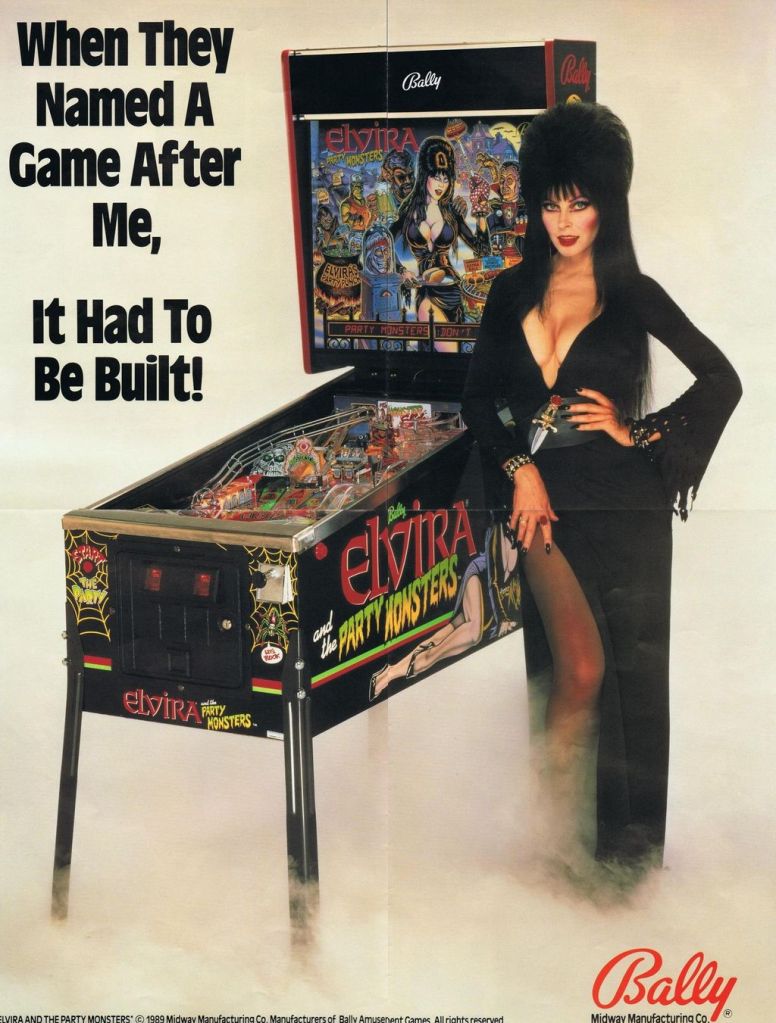
The original Elvira game, designed by Dennis Nordman and finished by Jim Patla after Nordman’s motorcycle accident, is a monster party with dancing Boogie Men, a skull ball lock, and Elvira’s voice running the show. It turned the horror movie hostess into a successful pinball franchise, and about 4,000 were made. It plays fast and mean for a late System 11 game.
Elvira returned in 1996 with Scared Stiff, a new machine designed by Nordman and Mark Weyna. Scared Stiff sent players through the Six Tales of Terror to climb the Stiff-O-Meter, past the crate, the coffin, and the Monster’s Lab, with a player-controlled spinning spider in the backbox awarding features along the way. This sequel is the more polished and feature-packed of the two machines, but when people picture an Elvira-themed pinball machine, they almost certainly picture Party Monsters. So the earlier game is the one that stuck, so it gets the slot on our list.
3. Twilight Zone (Bally, 1993)
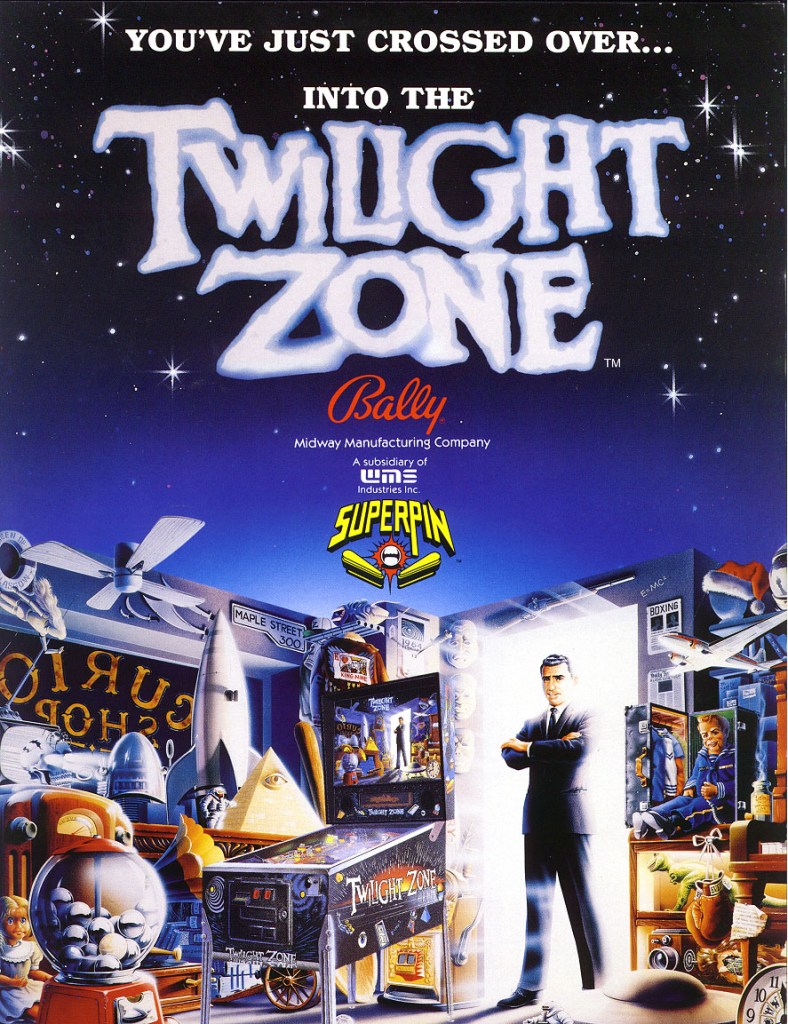
Given a blank check after The Addams Family, Pat Lawlor built what is often called the most complex pinball machine ever designed. It packs in a working gumball machine, a working clock, a magnetic mini playfield called the powerfield, and the powerball, a white ceramic ball that plays faster than steel and ignores magnets. Sure the Twilight Zone theme is more an eerie than straight horror, but the atmosphere and ambition keep it near the top of any list.
2. Monster Bash (Williams, 1998)
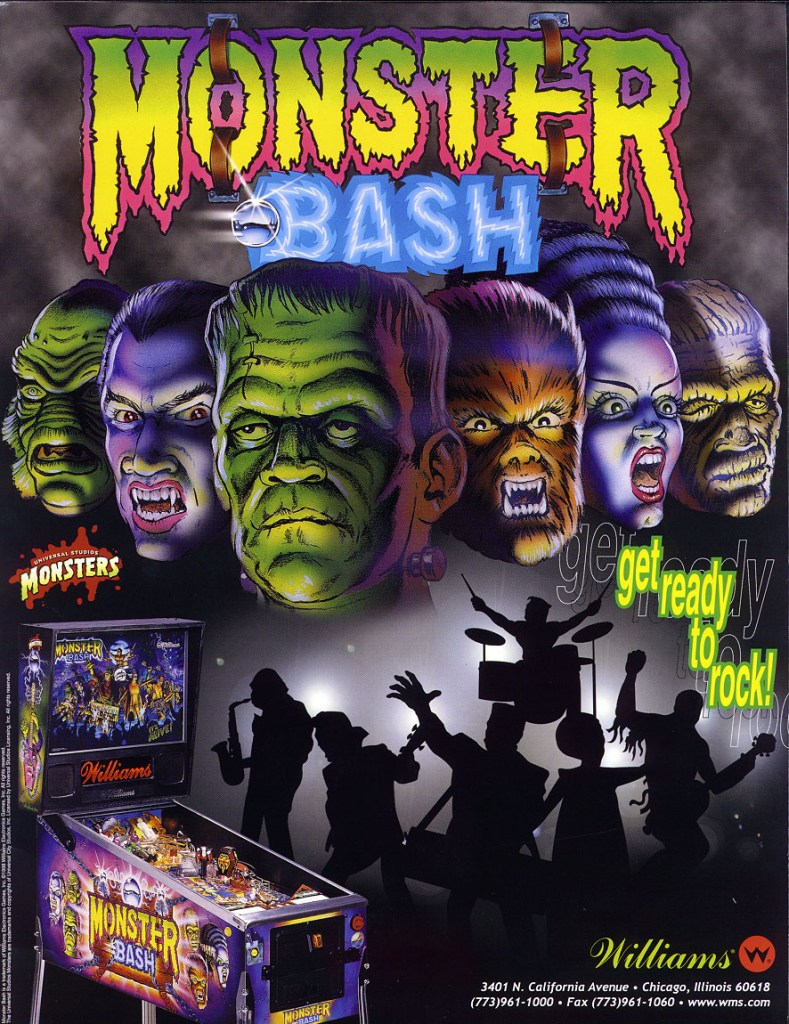
George Gomez rounded up six Universal Monsters: Dracula, Frankenstein’s monster and his Bride, the Wolf Man, the Mummy, and the Creature from the Black Lagoon (no Phantom?!), and put them in a rock band called the Monsters of Rock. Dracula glides across the playfield on a track, the Frankenstein’s monster rises off of his slab, and you collect each creature’s instrument on the way to the wizard mode. Only 3,361 were made, late in the Williams run, and Monster Bash is one of the most loved pinball games ever built.
1. The Addams Family (Bally, 1992)
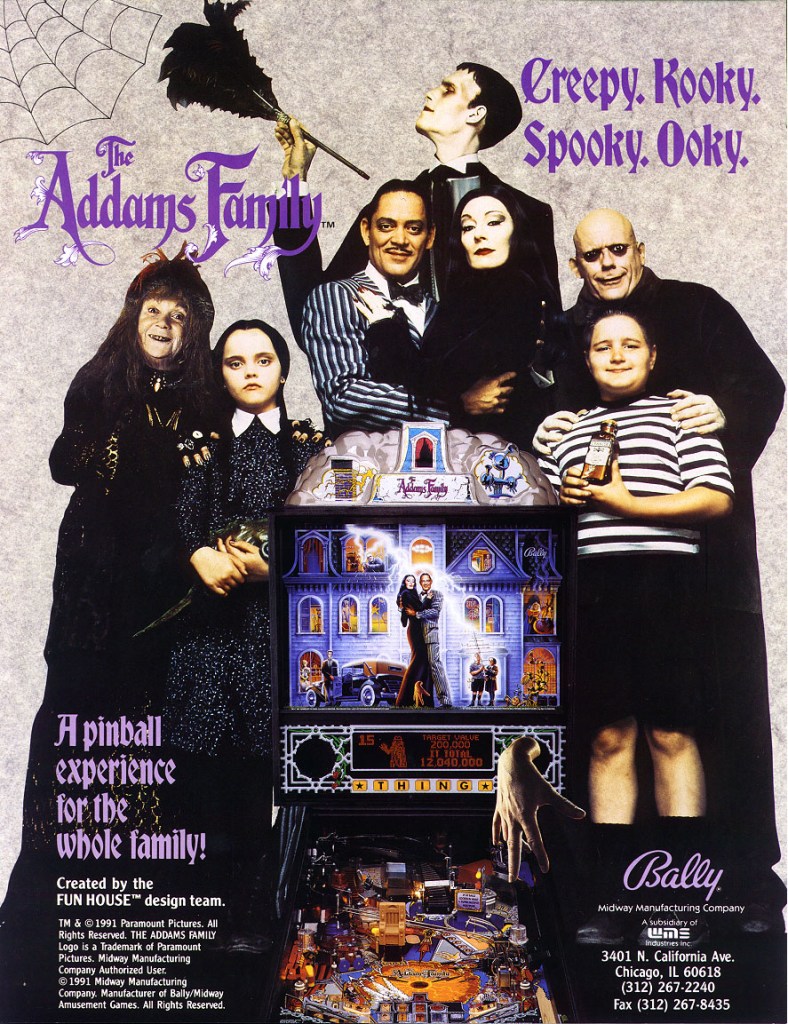
Pat Lawlor’s mansion crawl is the best-selling solid-state pinball machine of all time, with 20,270 built, and The Addams Family earns the top spot on play just as much as sales. Thing, a mechanical hand with a magnet in its palm, reaches out and snatches the ball to lock it, The power uses magnets under the playfield to sling the ball around, and Raul Julia and Anjelica Huston recorded custom speech for the game. It’s funny, spooky, deep, and friendly to new players all at the same time, which no other game on this list manages quite as well. Snap! Snap!
Honorable Mention: FunHouse (Williams, 1990)
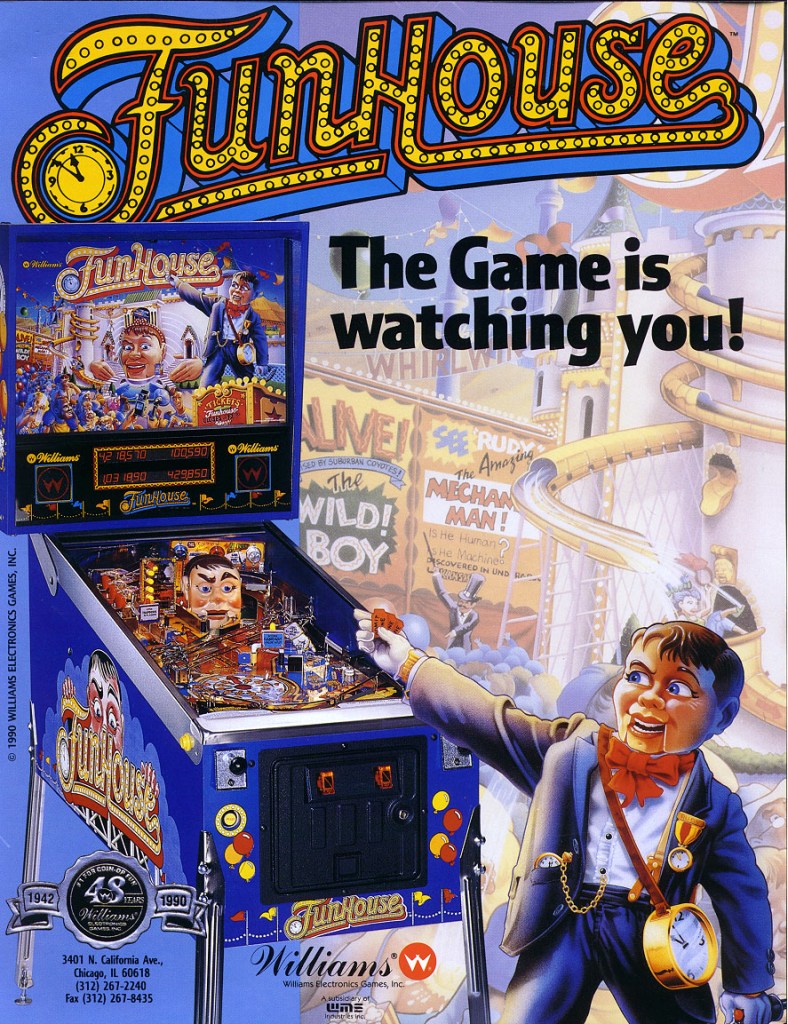
Yes, FunHouse is a carnival game. No, we don’t care, because Rudy is terrifying. Pat Lawlor put a giant ventriloquist dummy head in the middle of the playfield, gave him eyes that follow your ball around, and let him talk trash at you for the entire game. Ventriloquist dummies are creepy. This is not up for debate. A dummy’s whole act is pretending to be alive while a guy off to the side does the voice, and everybody in the audience agrees to go along with it. Sounds like how some hauntings start. Rudy blinks. He smirks. He falls asleep, and if you shoot the ball into his open mouth while he snores, he wakes up in a fury, which is admittedly the correct response, if you ask me. FunHouse is a great game, but let’s be honest about why it almost belongs on a horror list: if that head turned up in your attic, you would move to another house.
Disagree? As you certainly should! Let us know in the comments how stupid we are, and feel free to use whatever expletives you find to be most fitting. Go on! We can take it!
Like what you just read?
The Splintering is 100% ad-free: no banners, no pop-ups, no sponsored nonsense. The trade-off is we need you to come to us. Get new posts by email and never miss a campaign, interview, or unboxing.
No ads, no spam. Unsubscribe anytime.

The Splintering’s TeePublic store has items for all budgets, great and small! If you like what we do & want to help keep our site 100% free of paid ads, go here!

