
Top 10 Horror Video Games from the Second Generation of Consoles
Before subsequent generations would bring us classics like Castlevania, Zombies Ate My Neighbor, and Resident Evil, Gen X kids back in the Ferg had slightly slimmer pickin’s when it came to their horror game options. The delivery mechanisms at the time were the so-called “second generation of consoles”, which includes the Atari 2600, Atari 5200, Bally Astrocade, Colecovision, Fairchild Channel F, Intellivision, Odyssey 2, and the Vectrex.
But which games and consoles from this early period of gaming history generated the most terrifying four-pixel ghosts and monsters? We’ve given our best effort to select the top ten best of the bunch.
It should be noted that neither the Vectrex nor the Fairchild Channel F received a single game that could be considered “horror”, and the 2600 gets the most representation on the list, not only because “Actiplaque” is the stuff of nightmares for any and all retro Atari collectors, but on account of the console’s game library, which is massive monstrous!
#10: Castle of Horror (1981, Bally Astrocade, Wavemakers)
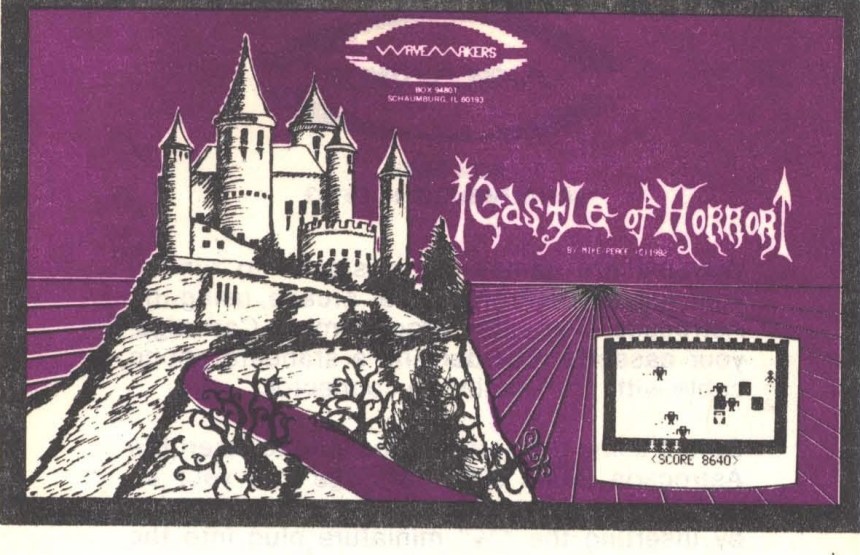
You play a wizard (who bears an unfortunate resemblance to E.T.) trapped in a haunted castle-of horror-fleeing from room to room while monsters converge on your position. Your only defense is plopping down magic barriers and hoping that the approaching enemies crash into them (or each other). When a monster obliges by self-destructing, the word “ZORK” flashes on screen, because nothing says terror like a reference to a classic text adventure game.
Sure, the Video Game Critic gave it a D-, but Castle of Horror is the Bally Astrocade’s lone horror representative, and it arrived the hard way: on a cassette tape, from a tiny dev outfit called Wavemakers. Gloriously wonky, pretty darn obscure, and exactly the kind of thing that deserves a spot on a list like this.
#9: Nightmare (1983, Philips Videopac / Odyssey 2 family, Philips)
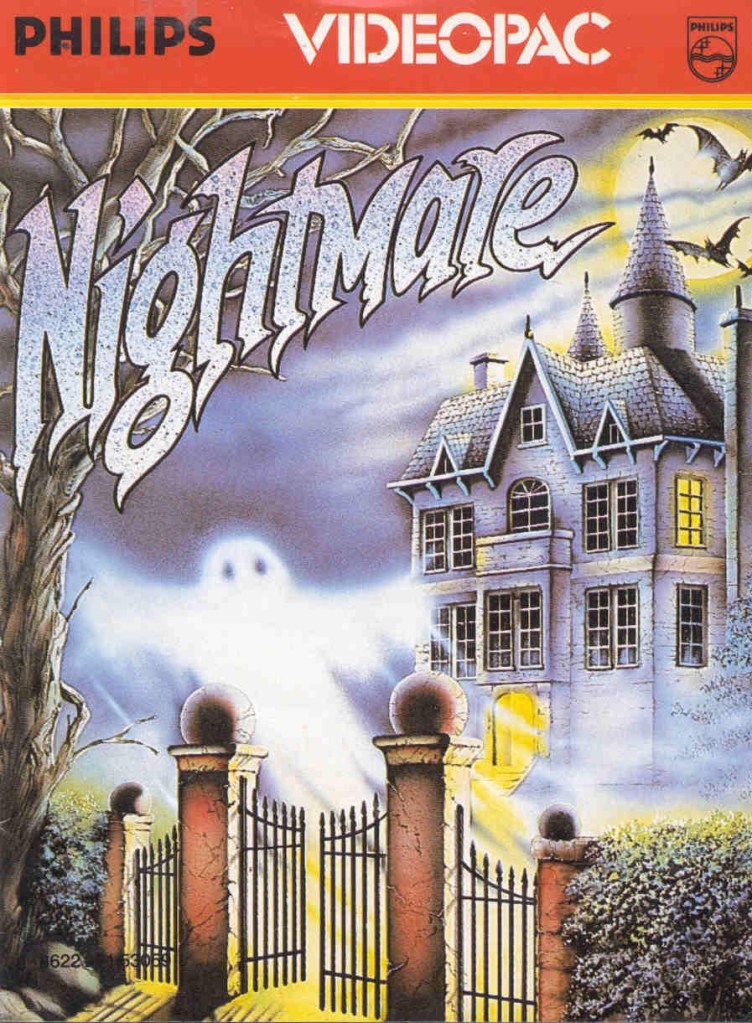
You wander into a haunted house (first mistake), the door slams shut behind you, and the only way out is through the attic. To get there, you have to climb three floors while dodging ghosts… which is about as fun as it sounds, in a good way, of course.
Nightmare was the only horror-themed game released for the Odyssey 2, and the game was a Europe-only Videopac release, so most Americans never even got the chance to play it. A console-exclusive spook that an entire continent missed is too good a story to leave off.
#8: Gremlins (1986, Atari 5200, Atari)
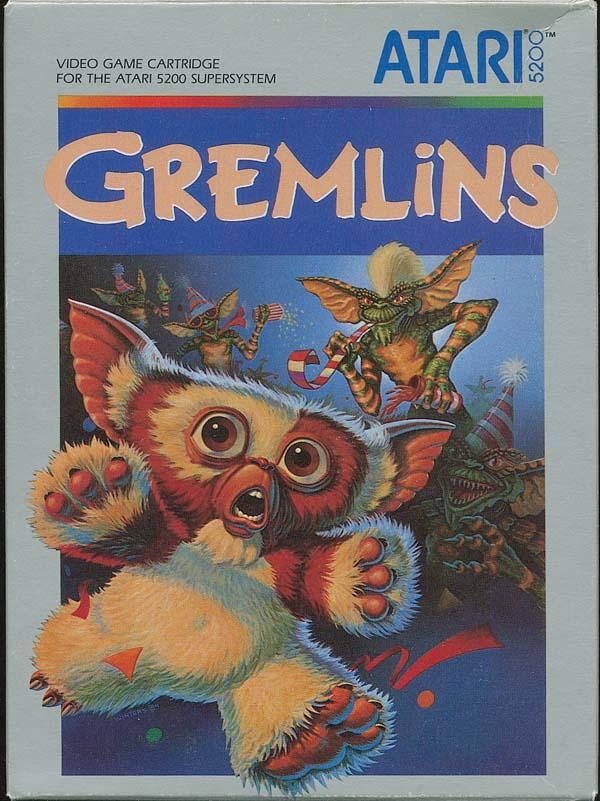
Based on the 1984 classic horror/comedy movie of the same name, you play Billy, racing around the living room scooping up mogwai and hauling them back to their cage while fending off gremlins with a sword. The rules are straight out of the movie and twice as stressful: let a mogwai snack and it becomes a gremlin, and it splits into two if it touches water. Survive until sunrise (6 AM) and you win.
It’s the Atari 5200’s sole horror entry, and it showed up in 1986, when the console was basically on life support. While a late-release movie license for a dying system is peak second-generation energy, having mechanics that are so well inspired by the three “rules” from the Gremlins movie makes it a natural fit for our list.
#7: Ghost Manor (1983, Atari 2600, Xonox)
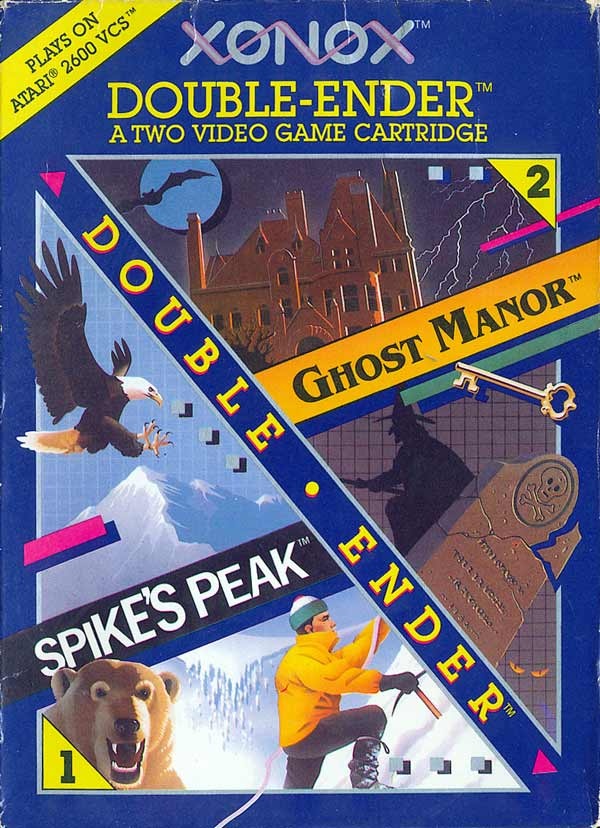
You play a girl chasing ghosts through a graveyard and the maze-like halls of a manor, hurling spears at ghouls along the way. It is undeniably weird, and historians of the genre have cited it as an early example of survival horror.
Beyond the spooky credentials, Ghost Manor shipped on Xonox’s infamous “double-ender” cartridge: two full games on one oversized cart that you plug in from either end (the other end, fittingly, was the mountain-climbing Spike’s Peak). Early survival horror on a two-headed cartridge is a game worth including.
#6: Venture (1982, ColecoVision, Coleco)
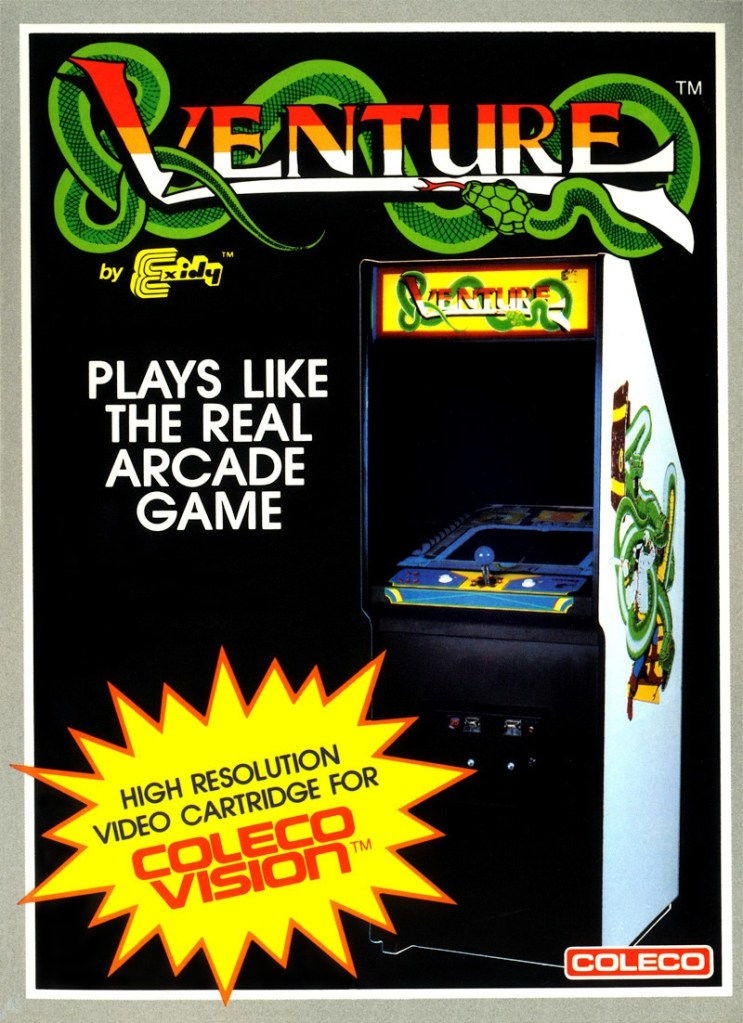
Venture is a port of Exidy’s 1981 arcade dungeon crawler. You play as Winky (yes, really, and yes, it’s trademarked), a bow-wielding adventurer raiding monster-filled rooms for treasure. The hallways are patrolled by aptly named “Hall Monsters” that cannot be killed, and the rooms are packed with snakes, goblins, and genies. Even the corpses of monsters you’ve already shot will hunt you down and kill you if you touch them before they rot. Neat.
The dungeon dread here is real, and the “don’t touch the corpse” mechanic is wonderfully cruel but cool. While it was also released on the 2600 and Intellivision, the ColecoVision port of Venture was the best home version.
#5: Night Stalker (1982, Intellivision, Mattel Electronics)
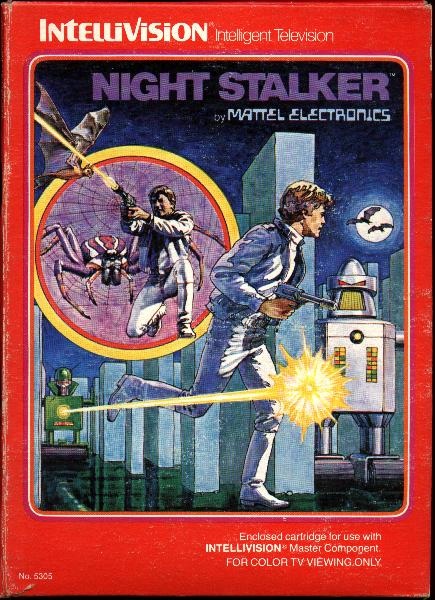
You play as a little fella trapped in a maze, and everything in it wants you dead: spiders, bats, and robots that get more aggressive every time you shoot one. Ammo is limited, the bunker in the corner is your only chance to catch a breather, and the robots evolve. It is a war of attrition and you are losing.
Night Stalker is the Intellivision’s best horror-adjacent game, and the tension holds up. There’s something deeply unsettling about enemies that learn from your bullets. The maze never ends, and the robots can’t be bargained with, can’t be reasoned with, and they absolutely will not stop… ever, until you are dead!
#4: Frankenstein’s Monster (1983, Atari 2600, Data Age)
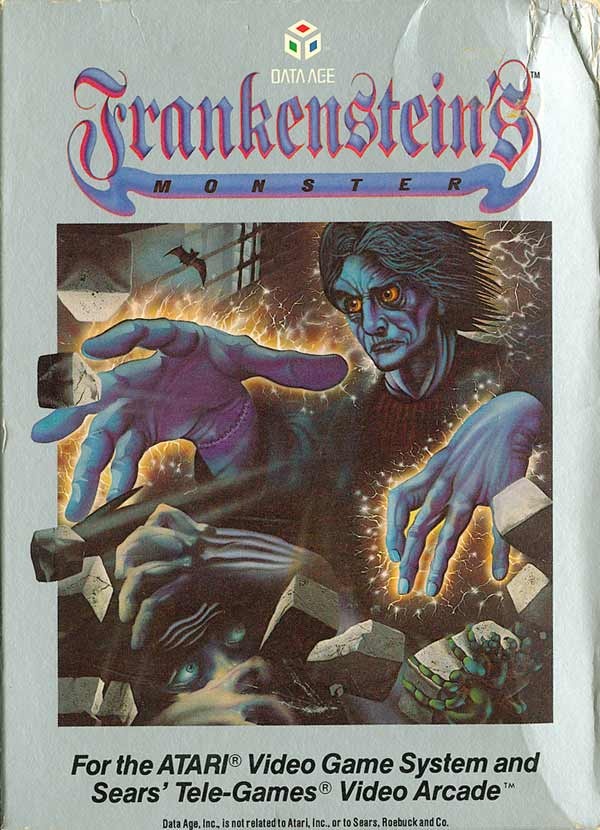
The infamous monster is about to awaken, and your job is to build a wall around his castle before he does. That means hauling bricks up and down the screen one agonizing trip at a time while a giant tarantula, a flock of bats, several ghosts, and a sparkling pool of acid all stand in the way of your construction project. Finish the wall in time and the village is saved. Fail, and Franky McNeckbolts wakes up and stomps everything flat, which is the best part of the game… frankly.
A fantastic premise, a genuinely creepy castle bestiary, and the rare game where losing is more fun than winning. Data Age only published a handful of 2600 games before vanishing, and Frankenstein’s Monster is one worth checking out.
#3: The Texas Chainsaw Massacre (1983, Atari 2600, Wizard Video)
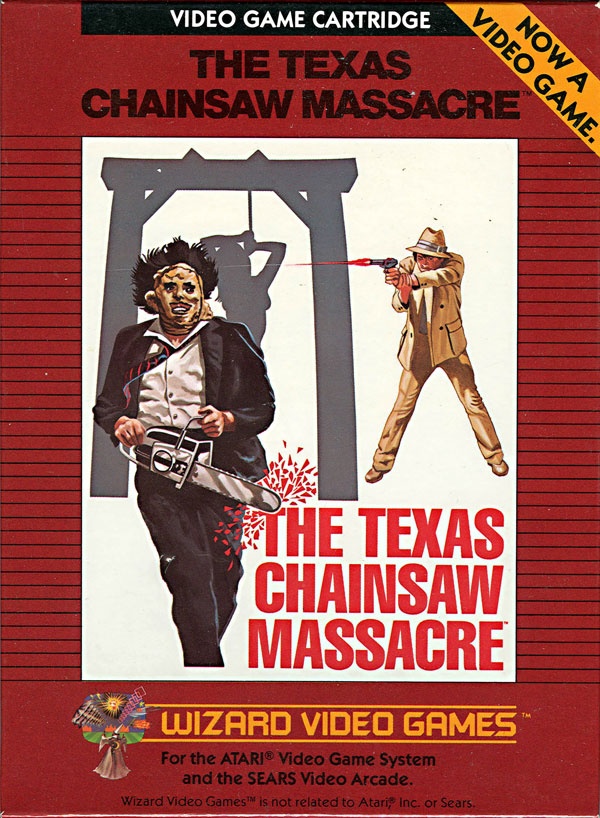
You don’t run from the killer in this one. You are the killer. As Leatherface, you rampage across the countryside chasing down fleeing victims with your chainsaw buzzing while dodging fences, cow skulls (WTF?) and wheelchairs (WTFF?). Each victim is worth 1,000 points and a little more gas for your trusty, rusty saw. Run dry and one of your victims jogs back on to the screen to kick you in your leathery backside.
“Society is to blame!” -Leatherface (probably)
A major studio letting you play as a slasher was nigh unthinkable in 1983, and plenty of stores refused to stock it, which only cemented The Texas Chainsaw Massacre as a legendary horror game. It’s a historically fascinating novelty that helped prove that games could be for grown-ups, for better or worse.
#2: Halloween (1983, Atari 2600, Wizard Video)
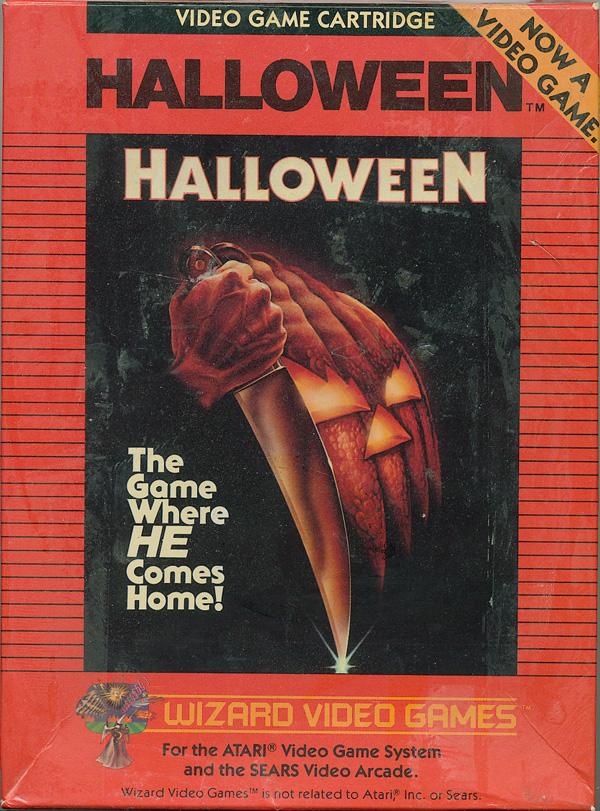
You play as the smokin’ hot teenage babysitter Laurie Strode on the worst night of her life. Your job is to escort the kids to safe rooms at opposite ends of the house while Michael Myers stalks the halls. No weapons, no power-ups, just you, the kids, and a guy in a white William Shatner mask with a big knife.
Just like The Texas Chainsaw Massacre, Halloween is another slasher movie where the killer can fail. Of Wizard Video’s two slasher licenses, Halloween is the better game, and the escort gameplay creates some genuine suspense. Leading pixelated children to safety while Michael closes in is simple and repetitive, but weirdly nerve-wracking and addictive.
#1: Haunted House (1982, Atari 2600, Atari)
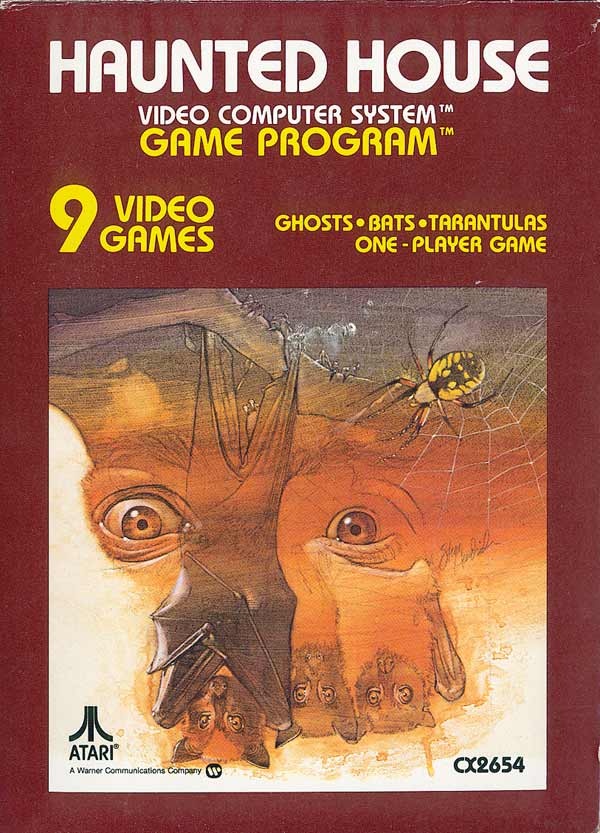
You are a pair of disembodied eyes exploring a pitch-dark mansion, hunting down the scattered pieces of a magic urn. Light matches to see where you’re going (they don’t reveal your body, just the room, which is somehow creepier), grab keys to open locked doors, and find the scepter that keeps the monsters at bay. Vampire bats, tarantulas, and a ghost roam the halls. Let anything touch you nine times and it’s over.
When you think “horror” and “Atari 2600” in the same thought, you are almost certainly envisioning those beady little iconic eyes from Haunted House, the granddaddy of video game horror. Haunted House is one of the earliest survival horror games ever made: dark exploration, limited resources, real monster dread, all dating back to 1982. It basically invented the formula that Resident Evil would perfect (eh, maybe nearly perfect) fourteen years later, and it did so with a pair of floating eyeballs.
Disagree? Of course you do! Let us know in the comments how stupid we are, and feel free to use whatever expletives you find to be most fitting.
Like what you just read?
The Splintering is 100% ad-free: no banners, no pop-ups, no sponsored nonsense. The trade-off is we need you to come to us. Get new posts by email and never miss a campaign, interview, or unboxing.
No ads, no spam. Unsubscribe anytime.

The Splintering’s TeePublic store has items for all budgets, great and small! If you like what we do & want to help keep our site 100% free of paid ads, go here!

